
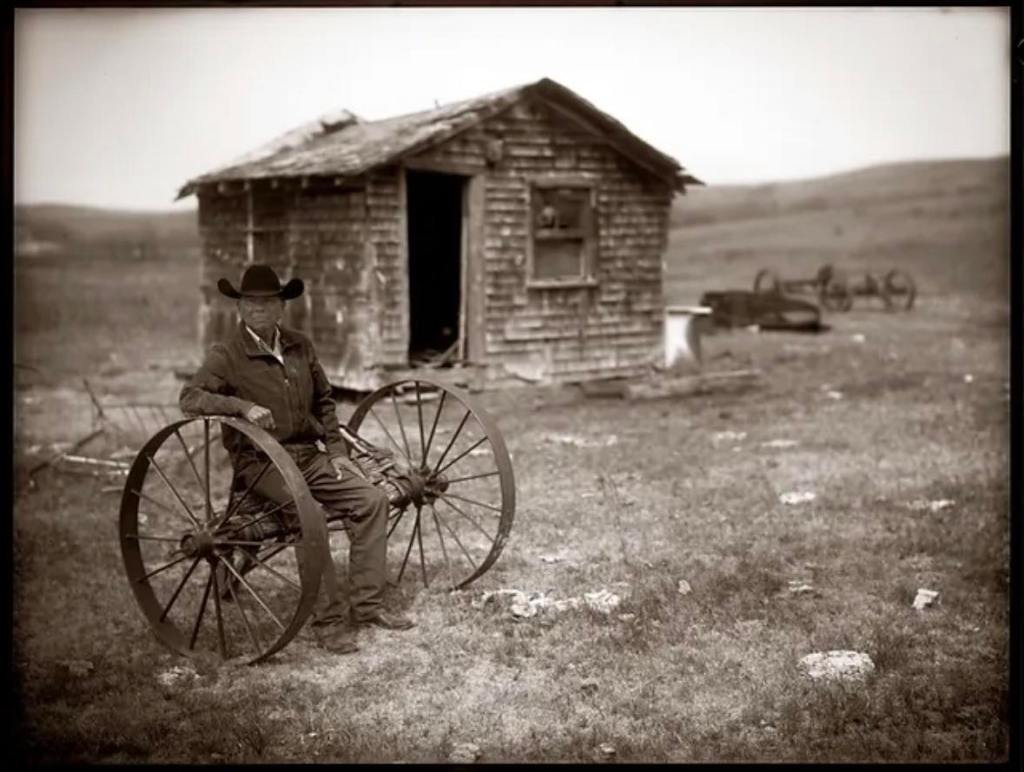
By Tamara Spotted Tail via Facebook
My husband, Chief John Spotted Tail, is a fifth direct descendant of Chief Spotted Tail. The land he leases is tied to allotted land that has remained connected to his family for four generations. For decades, John has taken care of this land himself—repairing fences, replacing posts, maintaining pastures, and protecting the land the way our ancestors taught us to do.
John is now 71 years old. His entire life has been rooted in caring for his ancestral homeland.
We are not a large operator. We work with a Native cattle operator who places cattle on the land for about six months out of the year. We also rotate a small number of our own horses and cattle between pastures to properly care for the land. The amount of land we lease is far smaller than a full range unit. This has never been about profit or control—it has always been about stewardship, survival, and honoring family land passed down through generations.
For over 50 years, John has always operated under a one-year lease through Tribal Land Enterprise (TLE). Recently, without any clear explanation, a new five-year lease was issued requiring a $6,000 performance bond. This was never discussed with John beforehand and was completely different from the process he had followed for decades.
Because of the sudden change, John was unable to secure the bond amount in time. He contacted both TLE and the Bureau of Indian Affairs asking why this was done and requesting clarification. Instead of receiving direct answers, he was repeatedly told, “We’ll call you back,” yet no clear communication or explanation was ever provided.
John attended a TLE board meeting and explained his situation directly. The board eventually agreed to return the lease, but only under harsh stipulations:
– The land must sit idle for an entire year
– John must pay for the lease but cannot use the land
– He must install new fencing
– He must complete land improvements and submit an improvement plan
These conditions created serious hardship for our family because without use of the land, we cannot take in cattle or continue the small operation that helps sustain us.
To us, this feels intentional and malicious. It raises serious concerns about political maneuvering and unequal treatment toward traditional Native operators.
At the same time, we are witnessing members of the TLE board and their families increasing their own herds, leases, and range units while long-time Native leaseholders are losing land access. Many of these board members are politicians, council representatives, or individuals with questionable backgrounds and conflicts of interest. Process and procedures are not being followed fairly or consistently.
As we began speaking out, more and more Sicangu families started contacting us with similar stories. Families who have leased and cared for land for generations are suddenly facing barriers, confusion, intimidation, or loss of access to tribal lands.
This is causing real harm to Native people on the Rosebud Reservation.
The Tribal Land Enterprise was originally created to help tribal members by protecting tribal lands, reducing land fractionation, and ensuring our people had access to land for homes, ranching, agriculture, and economic survival. It was never intended to benefit insiders while traditional Native families are pushed aside.
This is why we are bringing awareness to what is happening.
We believe there needs to be:
• Transparency in leasing decisions
• Accountability within TLE
• Fair treatment for tribal members
• Protection for traditional Native land operators
• Independent review of leasing practices and conflicts of interest
If you want to help bring awareness, share this story. Speak up. Contact tribal leadership. You may also write to the Department of the Interior or the Bureau of Indian Affairs regarding concerns of insider leasing practices and corruption involving tribal lands on the Rosebud Reservation.
Our people deserve fairness. Our elders deserve respect. And our ancestral lands deserve to remain in the hands of the people who have cared for them for generations.
Picture is on John in front of his Great-great grandfather’s old house. John used to sleep in the wagon at night and live with his grandma and grandpa at this little house when he was a young man


Leave a Reply